

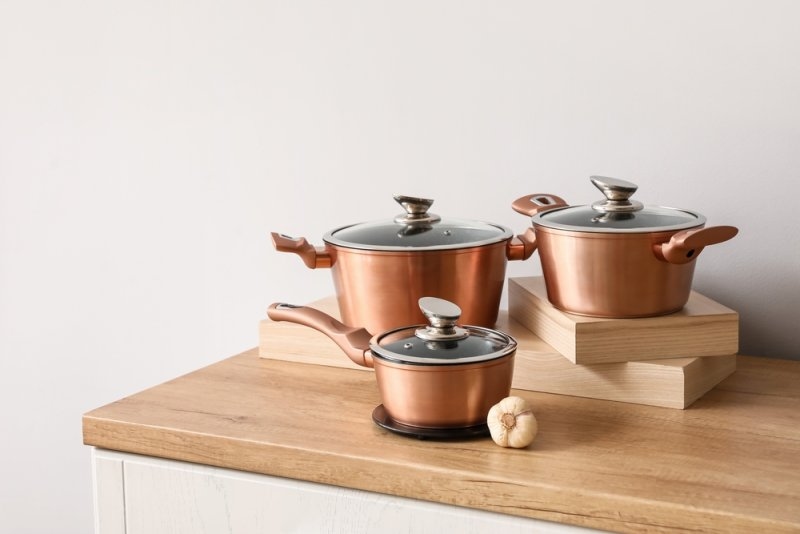
Watch a chef flip an omelet in a gleaming copper pan without so much as a scorch mark, and it's easy to wonder if all the hype (and the price tag) is actually justified. Weeks of testing, cooking sauces, searing proteins, and scrubbing pots revealed what actually holds up once the shine wears off.
Copper conducts heat about ten times faster than stainless steel. Turn the burner down, and the pan actually listens. No lag, no stubborn hot spot, still cooking garlic into charcoal while the rest of the pan catches up.
That's not marketing spin, it's just physics, and it's why professional kitchens have leaned on copper for centuries. Home cooks are catching on for the same reason, especially anyone who makes sauces, risotto, or candy, where a couple of degrees really is the difference between "perfect" and "start over."
A few things separate a genuinely good set from an expensive shelf decoration:
This trips up a lot of shoppers, and it's fair to be confused about it.
Solid copper pans are copper all the way through, aside from the lining. They're the most responsive pans on the market, and also the heaviest and most expensive by a wide margin.
Copper-clad pans sandwich copper between layers of aluminum and stainless steel. Still fast heat response, just lighter and considerably cheaper.
For most home kitchens, a solid copper-clad set is the smarter call. Full solid copper is best saved for the kind of cook who genuinely lives and dies by sauce work.
Eight sets were tested side by side, cooking the same three things on each: crepes (to check even heating), a pan sauce (to test how quickly the pan responds to changes in heat), and sautéed vegetables (to see how they browned). Each set then went through a week of normal cooking and cleanup, because a pan that performs great on day one and warps by day five isn't worth much.
Four sets earned a permanent spot. The other four either heated unevenly or felt too flimsy for actual daily use. Here's why the winners won.
Must Try: Which 8-Essential Pots and Pans Cookware Set is Best?
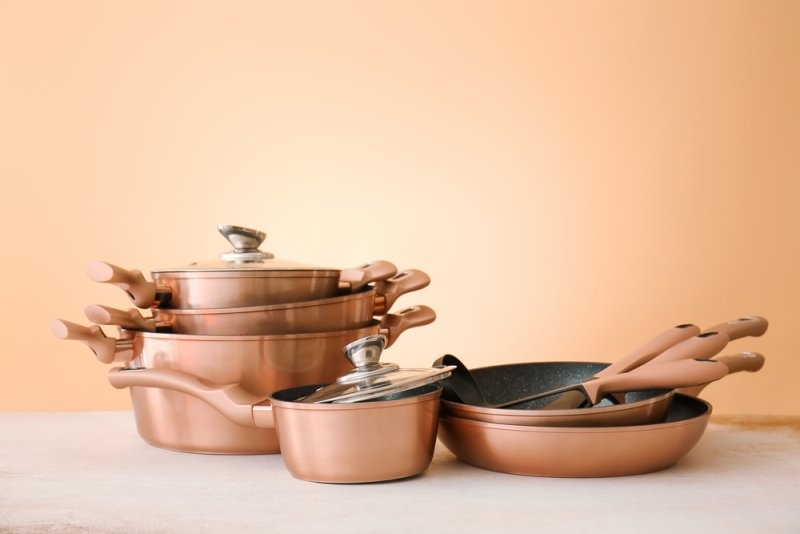
The most consistent performer of the bunch, full stop.
Best for: cooks who want one set that just handles everything.
If price isn't the deciding factor, this is the set that impressed most in terms of pure performance.
Best for: the serious home cook chasing a genuinely professional experience.
A surprise standout. Most of the performance, none of the sticker shock.
Best for: anyone copper curious but not ready to go all in.
Not everyone has cabinet space for a sprawling 10-piece set, and this one doesn't pretend otherwise.
Best for: smaller kitchens, or cooks who'd rather have four great pans than ten mediocre ones.
Depends on how the cooking gets done. For sauces, candy, or anything needing quick, precise temperature swings, copper earns its keep fast. For weeknights that are mostly pasta and sheet pan dinners, a solid stainless or nonstick set will do the job for a lot less money.
That said, even the budget copper sets brought a visible improvement in browning and control. That part isn't just marketing.
Copper is a little needier than the average pan, but not complicated:
Taken care of, a good copper set can genuinely last a lifetime. Some cooks are still using pieces passed down from a grandparent.
A great pan is only half the job. The right utensils protect the surface and make cooking a lot easier. Worth reading up on frying utensils that pair well with high-end cookware, and for anyone doing much frying, getting oil temperature right matters even more with copper in the mix.
Also read: Which are the 7 Best Cast Iron Skillets to Buy in 2026?
Yes, as long as it's lined with tin or stainless steel. Unlined copper reacts with acidic foods and isn't considered food-safe for regular cooking.
Only if it has a magnetic base layer, usually stainless. Pure copper alone won't work in an induction cooker.
It's normal, and purely cosmetic. A copper polish or a quick salt-and-lemon scrub brings the shine back in a few minutes.
Copper heats faster and more evenly, which is great for precision cooking. Stainless steel is tougher and has lower maintenance. Many serious cooks keep both.
Cost and upkeep. It's pricier upfront and needs hand washing and occasional polishing to stay in shape.
This content was created by AI