

Cooking at home has changed. People care more about ingredients now, and technique too. Yet one thing still gets ignored — knives. A poor knife slows everything down. Tomatoes are crushed instead of sliced. Meat tears. Herbs end up bruised. Even simple prep feels annoying after a point.
A good knife set fixes more than cutting. It changes the rhythm in the kitchen. Suddenly, chopping feels quicker, cleaner, and oddly satisfying. Japanese knives especially stand out because they cut with less force, stay sharp longer, plus they feel lighter in the hand. But choosing one is messy because there are too many options, brands, steel types, and shapes.
In this blog, we will look at how to choose the best Japanese kitchen knife set, compare knife types, understand sharpeners, look at brands worth buying, plus figure out what really works for home cooks chasing professional results.
A Japanese kitchen knife set feels different from regular Western knives. Usually thinner. Sharper too. The blade cuts instead of forcing food apart, which matters more than people think.
Japanese knives are built for precision. You notice it while slicing fish, vegetables, herbs, and even soft fruits that normally collapse under pressure. Brands like Shun, Miyabi, Tojiro, and Yoshihiro have become favorites because they mix sharp edges with balance.
The steel matters as well. Many Japanese blades use harder steel compared to standard Western knives. That means longer edge retention. Less sharpening. Though yes — harder steel chips are easier if handled badly.
A proper knife set should feel useful, not decorative. Too many sets throw in random pieces nobody touches.
Here’s what you really need in the kitchen:
Don’t waste money on those big knife blocks with fifteen random blades. Most of them collect dust.
Also Read: Find The Best Deep Fryer For Home To Make Crispy Snacks
Finding the best Japanese kitchen knife set depends on cooking habits more than price.
Someone cooking basic meals every week probably does not need handcrafted blades costing a fortune. But if cooking feels serious — maybe weekend meal prep, fresh meat, and vegetables daily — quality matters more.
This gets overlooked.
Japanese knives often come in stainless steel, carbon steel, or layered Damascus steel. Stainless steel feels easier for beginners because maintenance stays low. Carbon steel gets sharper but stains faster if ignored.
People obsess over blade shape. Fair enough. But uncomfortable handles ruin everything.
Some Japanese knives use traditional wooden octagonal handles. Others, like Global, use stainless steel handles with modern grip patterns. One person may love lightweight balance; another hates it instantly.
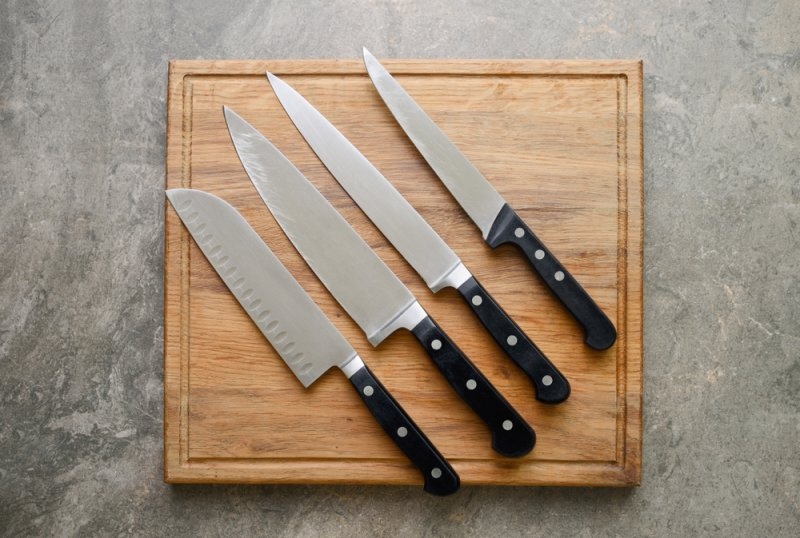
The topic of chef knife vs utility knife confuses many buyers because both seem similar at first glance.
A chef's knife works for heavy daily prep. Big vegetables, meat trimming, herbs, and garlic smashing. It is the workhorse.
A utility knife sits between a chef knife and a paring knife. Smaller. Easier for tighter tasks. Good for slicing apples, sandwiches, chicken breast, or jobs where larger blades feel clumsy.
Don't Miss: Select Between Best Stainless Steel vs. Nonstick Fry Pans
The debate around German vs. Japanese knives never really stops.
German knives focus on durability. Japanese knives focus on precision.
Brands like Wüsthof or Zwilling usually create thicker blades that survive rough handling. You can cut harder foods without worrying too much.
Japanese knives from Shun, Yoshihiro, or Masamoto stay thinner, sharper, and lighter. Better slicing. Better precision. But they ask for more care.
Even premium knives become frustrating if dull. Which means a good knife sharpener for home matters almost as much as the knife itself. Many beginners ruin expensive blades using cheap pull-through sharpeners aggressively. Bad habit.
Traditional whetstones remain the best choice for Japanese knives because they sharpen without damaging delicate edges. Brands like Shapton or King sharpening stones get recommended often. It takes practice, though. Slight learning curve.
Buying quality does not always mean spending huge money. A budget knife set can still perform surprisingly well.
Tojiro sits near the top for affordable Japanese knives. Sharp, reliable, built better than expected for the price.
Dalstrong also gets attention because of its dramatic design plus decent performance. Though some cooks feel branding gets louder than craftsmanship.
Learn More: Must-Have Baking Tools Every Pie Maker Needs in the Kitchen
The best Japanese knife set is not automatically the most expensive one. It is the one that matches how you cook, how often you cook, plus what feels natural in your hand. Some people fall in love with Miyabi’s polished feel. Others swear by Tojiro because value matters more than branding. Shun stays popular for good reason — reliable, sharp, familiar.
Absolutely. Just stick with stainless steel, because they’re a lot easier to care for. Look at Tojiro or Shun—their starter sets are sharp and low-maintenance. Honestly, unless you want chipped blades, keep these away from bones or anything frozen. That thin steel isn’t forgiving.
Decades—if you actually take care of it. Keep the edge sharp, always hand-wash, and dry it right away. The steel holds a sharp edge much longer than you’d expect, but treat it roughly, and you'll ruin it in no time.
Never. Dishwashers will ruin the sharp edge, beat up the handle, and even rust the blade. Hand washing takes what, a minute? That little bit of effort keeps your knife in shape for years. Way more important than people think.
Both get the job done, but magnetic strips usually treat your blades better—no clashing edges, nothing trapped. Knife blocks are fine, but sometimes they trap moisture or dull the edge when you pull knives in and out.
This content was created by AI