

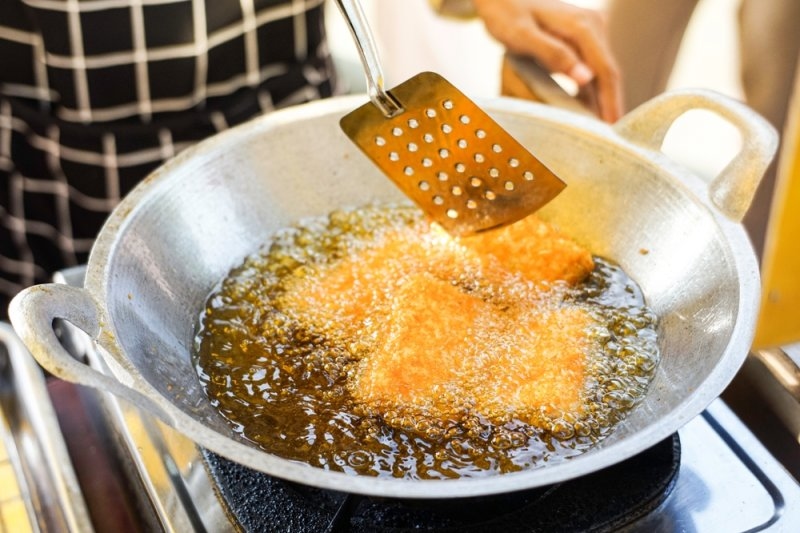
Which method of cooking, deep frying vs pan frying, impacts how crispy food will become, how fast it will cook, how much oil you need for pan frying and deep frying, and the taste it will have.
There are many types of frying you can use that can make foods browned in amazing taste, including surrounding food with hot oil and placing the food into some hot oil.
The most obvious characteristic of the two techniques is how the food gets submerged in oil. When deep frying, all areas of the food are surrounded by the hot oil, whereas when pan frying, it can only depend on how much the food touches the hot surface on both sides.
Typical deep-frying temps range between 350°F and 375°F, whereas a pan-frying temp depends on the recipe and the pan being used. Deep-frying cooking times tend to be quicker than pan-frying since the entire exterior is simultaneously hitting a high-temperature source.
This frying method takes enough deep-frying oil to ensure all of the food is saturated. As it hits the high temperatures of the deep-frying oil, the exterior caramelizes instantly, which helps create a quick and crispy golden-brown layer of food. This is the best method if crispiness is your goal and the temp of the oil is at the perfect temperature.
Any temperature below 350°F will allow the food to soak in more oil, and any temperature above that can burn the edges and create a terrible taste.
Pan-frying only requires a decent amount of pan-frying oil and using a pan with sufficient size for whatever you are cooking. You need enough to make an even, thinly dispersed layer across the pan. To get a good brown color without burning the outside, you do need to keep it at a high temperature.
If there is one that uses more oil between these two frying methods, it's deep frying; that's simply due to having to put in enough oil to coat everything. With both methods, deep frying vs pan frying, oil absorption will differ based on the level of moisture in the food, how long the food has been cooking for, the level of heat, and the coating (if any) that is on the food. Eating food fried in more oil doesn't always mean you will eat more oil. A stabilized high temperature is one that will keep your oil from absorbing too much.
Some of the main takeaways are:
There's a difference between each frying method. If your goal is extremely crispy French fries, fried chicken, fritters, battered chicken wings, and battered fish, use the deep fryer because it will cook very small quantities very quickly due to the equal distribution of high temperatures.
The only drawback of pan-frying it is that it takes a lot longer. It only cooks all parts on the outside, not all parts on the inside, but it is ideal when you want to fry something where the food surface is much thicker, like chicken cutlets, burgers, and pork chops, where surface browning will control you much easier in relation to color.
Let's see some pros and cons for deep-frying and pan-frying, respectively.
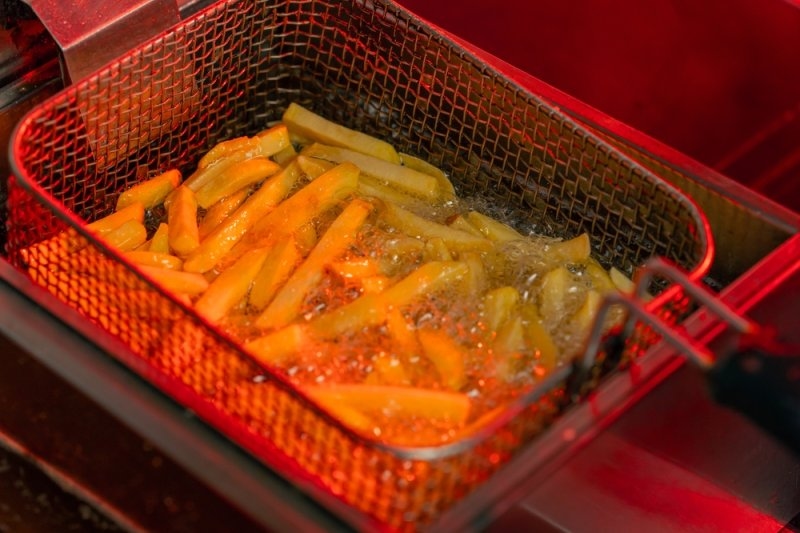
As a general rule, foods that you wish to have an evenly colored, crispy exterior benefit the most from being deep-fried. These are often coated in some type of batter and should not have too many wet ingredients on them to prevent excess oil splatter. These can include:
Food should be absolutely dry before putting it in. Anything more could lead to serious splatter when hitting the oil and result in uneven browning.
Pan frying is ideal for most average foods and when you don't necessarily need a super crispy exterior. This means you do not need to fill the pan with a layer of oil covering everything, and it gives you some good control over your color, as opposed to if you were to deep fry something and it just got cooked all at the same time.
This includes things such as chicken cutlets, pork chops, fish fillets, burgers, vegetables, pancakes, and breaded items. Proper amounts of pan-frying oil with a stable medium-to-high temperature should be used to give you the best results.
Many may argue whether pan-frying is indeed a healthier method of frying than deep-frying and whether it can make you lose more weight than deep-frying does with each serving you consume. This is due to the fact that pan-frying uses only a moderate amount of oil, whereas deep frying uses a lot to create the same browned effect.
Hot oil is dangerous and needs to be handled carefully. You need an adequately deep pan, but not one filled to the brim. Also, make sure that you're putting the food in evenly to minimize splatter. Another rule to follow is that if you ever get water on the oil fire, do not throw water on it; it will only make the fire worse.
Other tips are:
There are certain times when you should definitely utilize pan frying and others when you should utilize deep frying. Use pan frying when using items such as fish, pork chops, chicken breast, burgers, and vegetables where only one side at a time is fine; the extra fat is not always needed and is not always preferable.
If your meal really relies on that extra crispy coating that can only be achieved by submerging your food in hot oil, then reach for your deep fryer when you're feeling inclined for crispy French fries and fried chicken. Which you prefer is a stylistic preference.
Ultimately, the debate of “what is the difference between deep frying and pan frying?" isn’t a debate to pick the best. Deep frying is best for a crispy result and for speed and even cooking, whilst pan frying is good for minimum oil use and control. Ultimately, the success of either method relies on maintaining the correct frying time and temperature.
The main difference between the methods relies on oil. There is more deep-frying oil than pan-frying oil used to get a crispy outside; however, pan-frying uses less pan-frying oil, which suits day-to-day cooking. Ultimately, either choice relies on the result you want from the food.
Deep-frying involves placing the entire food in hot cooking oil, and pan-frying only involves covering the surface of the food with hot oil in a pan. The former cooks things faster, makes things crispier, uses less cooking oil, and makes food cook more uniformly brown.
A deep fryer will make the outside of the food crispier than a pan fryer because a layer of hot cooking oil surrounds all parts of the foodstuff. When pan-frying, the crispiness comes with dry food and the correct cooking oil temperature.
A deep fryer cooks your food in a considerable volume of oil, but the amount of oil that your food absorbs really does depend on your cooking oil temperature, the moisture level of your food, the thickness of the coating of your food, and the duration of time of cooking. Control your cooking oil temperature as much as you can.
Pan frying works best for an intimate meal or when preparing a fast snack, as it does not use all that much oil or cookware. Deep fryers use more hot cooking oil and a closely regulated cooking oil temperature, although they often produce foods that are more crisp and faster.
It might. If the recipe uses less oil, you will be adding less fat when pan-frying; however, that really depends on what kind of foods you are cooking and their portion size, as well as what type of cooking oil you are using, how long you cook, and how many procedures.
This content was created by AI