


Cooking up fried chicken, bacon, or a big holiday roast? You might end up with a lot of oil and wonder what to do with it. Dumping it in the sink feels quick, but it’s a bad idea. That oil glues itself to your pipes, traps food scraps, and eventually turns into a stubborn clog that’ll have you calling a plumber.
Handling cooking oil the right way isn’t hard if you break it down: small amounts get absorbed and tossed, and bigger amounts go to recycling or a proper collection site. The trick is knowing your local guidelines, since there’s no one-size-fits-all rule.
The basic rule for how to dispose of cooking oil is straightforward: keep it out of drains. Cooking oil may look harmless while warm, but it cools inside pipes and becomes sticky or solid. Over time, grease combines with food residue and other debris.
The safest approach depends on the amount, condition, and type of oil. A little oil left in a skillet is handled differently from several gallons left after a large frying session.
For most U.S. households, how to dispose of cooking oil comes down to three practical choices: absorb small amounts, store larger quantities for collection, or check whether your community accepts used oil for recycling.
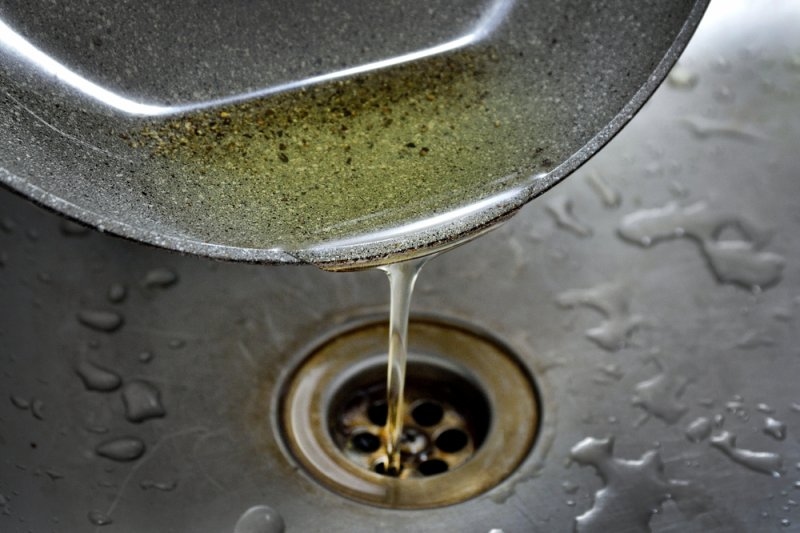
If you are asking, can you pour oil down the sink? The answer is no. Even hot oil should not be sent through a household drain. Once it cools, it can cling to pipe surfaces and contribute to blockages.
Running hot water afterward does not make the practice safe. Soap may temporarily move some grease farther down the line, but it does not remove the underlying problem.
This is one reason how to dispose of cooking oil should be considered before you start cooking. Keep a container nearby if you know the meal will produce a lot of leftover oil.
Oil does not simply disappear after leaving the sink. It travels through plumbing, cools, and can collect around bends or narrow sections. Food scraps make things worse. Grease acts like glue, trapping other material as it moves through the system.
That means "can you pour oil down the sink" is not really a question of whether it flows today. The issue is what happens after it cools.
Don't Miss: Peanut Oil vs Vegetable Oil: Which One Fits Your Kitchen?
After the oil cools down, it’s pretty easy to get rid of it without making a mess or messing up your pipes.
First off, you need to think about safety. Turn off the heat and let the oil cool completely. Never move a pan full of very hot oil into a plastic container.
Once cooled, pour the oil carefully into a sturdy, leak-resistant container with a secure lid. An old jar or original oil bottle can work when clean and strong enough.
For a small quantity, absorb the oil with paper towels or another absorbent material. Place the material in your regular household trash after it has cooled.
Another option is mixing a small amount of oil with absorbent household waste before disposal, where local rules allow it. This method is useful when how to dispose of cooking oil involves only a few tablespoons rather than a large frying batch.
Several cups or more should generally be collected rather than poured into the trash loose. Let it cool, transfer it to a sealed container, label it if needed, and keep it upright until disposal.
Do not mix used cooking oil with chemicals, cleaners, or other household liquids. Put the oil in a sturdy, leak-proof container. That way, nothing spills in your trash, and it’s easier to haul if your area has an oil drop-off spot.
Lots of local recycling programs actually turn used cooking oil into new products, which means less waste ends up in your drains or the environment.
If you are wondering how to recycle cooking oil, start with your city, county, or waste-management program. Some U.S. communities have drop-off sites or special household grease collection programs.
Restaurants commonly recycle large volumes of fryer oil, but residential programs vary considerably. Search your local government waste website for terms such as “used cooking oil,” “household grease,” or “cooking oil recycling.” Rules differ by location.
Recycling works better when the oil contains as little food debris as possible. Let it cool, strain out large food particles if your local program recommends it, then store the oil in a closed container.
Do not mix different household chemicals into the container. If a collection program accepts used oil, follow its exact container and drop-off instructions. That is the safest answer to how to recycle cooking oil. When you have a larger quantity.
Suggested Reading: Canola Oil vs Vegetable Oil: Best Option for a Healthy Diet
Knowing where to throw away cooking oil depends mainly on how much you have and what your local waste rules permit.
| Amount | Practical option | Avoid |
|---|---|---|
| A few tablespoons | Absorb and trash | Sink or toilet |
| About a cup | Seal in a container and trash if locally allowed | Loose disposal |
| Several cups | Collection or recycling site | Household drain |
| Large frying batches | Used-oil collection program | Regular drain disposal |
This table is a starting point, not a replacement for local rules. U.S. waste programs differ.
For larger quantities, where to throw away cooking oil may mean a dedicated recycling or household hazardous-waste-style collection site. Just check the rules—some places only take vegetable oil, while others don’t accept any at all.
Call or check before driving there. A collection center may require sealed containers, specific quantities, or certain oil types. This is usually better than putting gallons of oil into household trash.
Small disposal habits can prevent messy spills, clogged pipes, and unnecessary waste while making used oil easier to handle.
One simple habit changes everything. Before frying or cooking with a large amount of oil, place a heat-safe container nearby so you already have somewhere to put the cooled oil.
This removes the temptation to use the sink. It also makes how to dispose of cooking oil less of a last-minute decision.
Not every batch of oil is automatically waste. If oil has been used safely and remains suitable for reuse, some cooks filter and store it according to food-safety practices.
Oil that smells rancid, has degraded badly, or has been overheated should not be reused. The point is simple: decide whether the oil is reusable before treating it as waste.
Also Read: Best & Healthiest Oil for Deep Frying: Top Picks 2026
At the end of the day, there’s one main thing to remember: don’t pour oil down the drain. Let it cool down, put it in a container, absorb small puddles for the trash, and always check for local recycling if you’ve got more. Taking a few extra steps means you’re protecting your pipes and following the right waste disposal rules.
Still wondering if you can dump oil in the sink? The answer’s a clear no. When you’re ready to get rid of used cooking oil, think about how much you have first, then find out what your local program allows. That way, you avoid pipe problems and keep waste out of the landfill when you can.
If you’re curious about recycling cooking oil, see if your city has a collection program before going straight to the trash. Spending a couple more minutes now can save you from greasy disasters later.
Most home compost bins don’t do well with liquid cooking oil. It messes up the balance and can draw rodents or insects. Always check the instructions for your compost setup before tossing in anything oily.
You don’t have to treat olive oil any differently from other cooking oils. Let it cool off, put it in a secure container, and see what your local waste service recommends for larger amounts.
You can keep used oil for a little while if you need to—just seal it tightly in a clearly labeled container until you’re ready to take it to a recycling or collection site. Make sure you keep it away from heat, open flames, and anywhere kids or pets might get into it.
Cat litter or similar absorbent stuff can help with small amounts by turning oil into a solid form for the trash. But disposal rules aren’t the same everywhere, so double-check with your local waste provider before doing this.
Yes. Even if you pour oil down the garbage disposal, it can still clog up your pipes. The disposal doesn’t make oil safe for the drain, so keep grease and oil out of there.
This content was created by AI